
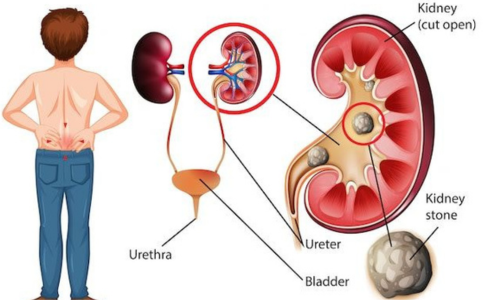
Kidney stones are hard deposits formed from minerals and salts in the urine. They can cause severe pain, urinary problems, and complications if left untreated. With modern techniques, most kidney stones can be treated effectively with minimal discomfort and quick recovery.
Understanding Kidney Stones
Kidney stones vary in size—from as small as a grain of sand to as large as a golf ball. Common types include calcium oxalate stones, uric acid stones, struvite stones, and cystine stones. They often form when urine becomes concentrated, allowing minerals to crystallize and stick together.
Symptoms typically include intense pain in the back or side (renal colic), pain during urination, blood in urine, nausea, vomiting, and frequent urge to urinate. Some stones pass naturally, but larger stones may block urine flow and require medical intervention.
Risk factors include dehydration, high-protein or high-salt diet, obesity, certain medical conditions, and family history. Early diagnosis through ultrasound, CT scan, or X-ray helps determine the best treatment approach.
Expertise in Kidney Stone Treatment
Dr. Dineshwar Pratap Singh, as a Consultant Urologist, Andrologist, and Renal Transplant Surgeon, specializes in advanced kidney stone management. He offers comprehensive evaluation and personalized treatment plans tailored to the size, location, and type of stone, as well as the patient’s overall health.
His focus is on providing safe, effective, and minimally invasive solutions that reduce pain and help patients return to normal activities quickly.
Advanced Treatment Approaches
Treatment depends on the stone’s size and location:
Small stones (less than 5 mm) are often managed with increased fluid intake, pain relief, and medications to help the stone pass naturally.
Larger stones require active intervention. Dr. Dineshwar Pratap Singh uses modern minimally invasive techniques such as:
- Laser Lithotripsy (including Retrograde Intrarenal Surgery – RIRS): A flexible scope is passed through the urethra to reach the stone. Holmium laser precisely breaks the stone into fine dust that can be flushed out.
- Ureteroscopy (URS): Effective for stones in the ureter. Stones are fragmented and removed using small instruments.
- Percutaneous Nephrolithotomy (PCNL): Used for large or complex kidney stones. A small keyhole incision is made in the back to directly access and remove the stone.
These procedures are performed with precision, resulting in less pain, shorter hospital stays, and faster recovery compared to traditional open surgery.
Lifestyle modifications and preventive measures, including dietary changes and proper hydration, are also emphasized to reduce the risk of stone recurrence.
Conclusion
Effective kidney stone treatment today focuses on relieving pain, clearing the stones safely, and preventing future episodes with minimal invasion. Advanced techniques like laser lithotripsy and endoscopic procedures have made treatment much more comfortable and successful. Dr. Dineshwar Pratap Singh provides expert, patient-centered care using the latest urological methods to ensure the best outcomes for every patient. If you are experiencing symptoms of kidney stones, timely consultation can help avoid complications and restore comfort quickly.